URGENT REQUEST FOR A HALT AND COMPREHENSIVE REVIEW OF OFFSHORE GOLD EXPLORATION IN GHANA
OPEN LETTER
TO H.E. THE PRESIDENT OF THE REPUBLIC OF GHANA
H.E. John Dramani Mahama
President of the Republic of Ghana
Jubilee House
Accra, Ghana
3rd October 2026
URGENT REQUEST FOR A HALT AND COMPREHENSIVE REVIEW OF OFFSHORE GOLD EXPLORATION IN GHANA
Your Excellency,
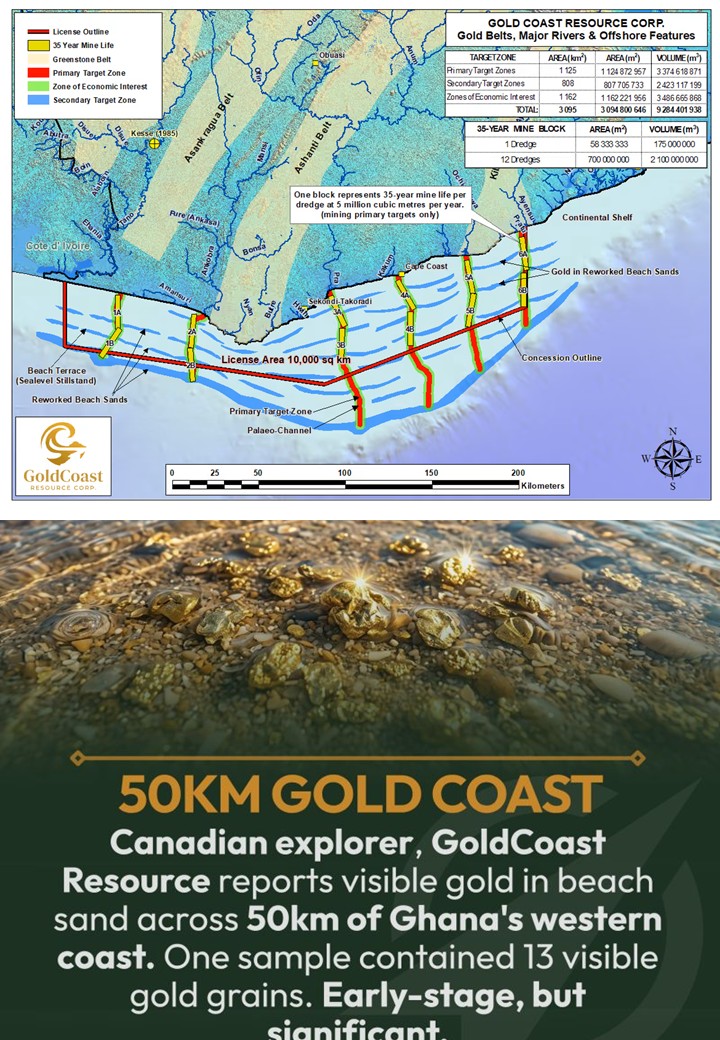
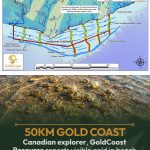
We, representatives of fishers’ associations, fishing communities and civil society organizations working on fisheries, coastal livelihoods, environmental protection, natural-resource governance and human rights, write to express concerns about the reported granting of ten contiguous Offshore Reconnaissance Licenses to GoldCoast Resource Corp., covering approximately 10,000 square kilometers of Ghana’s western offshore area and extending for about 300 kilometers from Half Assini towards Winneba.
We recognise Ghana’s legitimate interest in developing its mineral resources. Our concern is not with mineral exploration itself, but with the extraordinary scale of the licensed area, its location within a productive marine environment, the potential implications for artisanal fisheries and coastal livelihoods, and the possibility that reconnaissance could progressively lead to seabed sampling, dredging and commercial offshore gold extraction. This is particularly important because the same marine space supports thousands of artisanal fishers, fishing communities, fish processors, traders and other coastal businesses. It also contains fish habitats, spawning and nursery areas and other ecological systems that underpin food security and the livelihoods of coastal populations.
A reconnaissance license should not be confused with a mining lease or an authorization for commercial extraction. However, the reported programme includes geophysical surveys, bathymetric and seismic investigations, coring and sediment sampling, while the company has publicly discussed prospecting and the potential for future shallow-water dredging. These activities could have substantially greater implications for the seabed, water quality, fisheries and coastal communities. The experience of offshore and coastal mineral extraction in other countries demonstrates that seabed disturbance, sediment resuspension, turbidity, changes to benthic habitats can have significant negative impacts on fisheries and marine biodiversity where appropriate safeguards and baseline information are absent.
We therefore believe Ghana must pause and critically examine this development now, before the project advances further and before potentially serious or irreversible environmental, fisheries and livelihood impacts occur.
OUR FOUR KEY DEMANDS
1. IMMEDIATE HALT TO THE OFFSHORE GOLD EXPLORATION PENDING A COMPREHENSIVE REVIEW
We respectfully call on the Government to immediately suspend further implementation and progression of the GoldCoast offshore gold exploration, pending a transparent and independent review. The review should examine how the ten licenses were granted; their precise coordinates and boundaries; the technical and economic justification; the proposed work programme; consultations undertaken; their relationship with fishing grounds and fisheries management areas; environmental and social risks; and the adequacy of the existing legal and institutional framework. We advise that until this review is completed and its findings made public, there should be no progression to prospecting, bulk sampling, dredging, substantial seabed disturbance or other higher-impact activities, and no new approval or authorization that would advance the project toward commercial extraction.
2. COMMISSION AN INDEPENDENT ENVIRONMENTAL, FISHERIES AND LIVELIHOOD IMPACT ASSESSMENT
Government should commission a credible, independent and publicly accessible assessment covering the entire licensed area and the potential development pathway. This must establish reliable baselines for fishing grounds, fishing seasons, catches and fishing effort; fish spawning, nursery and feeding areas; seabed and benthic habitats; sediment characteristics and movement; water quality and turbidity; marine biodiversity; navigation; and the livelihoods of fishing communities, processors, traders and other coastal businesses.
The assessment must examine the potential impacts of seismic surveys, coring, sediment sampling, bulk sampling and, importantly, possible future shallow-water dredging, including sediment plumes, seabed disturbance, impacts on fish habitats and potential changes in access to fishing grounds.
The assessment must not be treated as a technical exercise controlled solely by the project proponent. Independent scientific review, fisher participation, community consultation and public disclosure of the findings must be integral to the process.
3. ESTABLISH A TRANSPARENT MULTI-SECTOR AND COMMUNITY REVIEW MECHANISM
We call for a formal review mechanism bringing together the Minerals Commission, Fisheries Commission, Environmental Protection Authority, Ministry of Lands and Natural Resources, Ministry of Fisheries and Aquaculture, Ghana Maritime Authority, relevant research institutions, fishing associations, coastal communities, traditional authorities and Civil Society Organizations (CSOs).
Government should publicly disclose the licenses, maps and coordinates, work programmes, applicable environmental requirements, regulatory approvals and conditions, consultations undertaken and the proposed pathway from reconnaissance to any future prospecting or extraction. Most importantly, fishing communities must not be treated merely as stakeholders to be informed after decisions have been taken. They must have a meaningful voice in decisions that could affect their fishing grounds, safety, livelihoods and future.
The review should also determine whether Ghana has an adequate marine spatial-planning and regulatory framework for managing possible conflicts between mineral exploration, fisheries, conservation, petroleum activities, shipping and other uses of the ocean.
4. NO OFFSHORE GOLD EXTRACTION WITHOUT PROVEN ENVIRONMENTAL AND LIVELIHOOD SAFEGUARDS
We urge Government to make it clear that commercial offshore gold extraction or substantial seabed disturbance will not proceed unless independent evidence demonstrates that the activity can be undertaken without unacceptable harm to marine ecosystems, fisheries, food security and coastal livelihoods.
Before any such activity is authorized, Ghana should require appropriate environmental assessment, fisheries and livelihood assessments, cumulative-impact assessment, clearly defined environmental performance standards, sediment and turbidity controls, independent monitoring, public reporting, effective grievance and redress mechanisms, and appropriate mitigation and compensation where legitimate losses occur. Ghana should also establish a clear national policy and regulatory framework for offshore mineral development before commercial extraction is permitted.
CONCLUSION
Your Excellency, we believe that a 10,000-square-kilometre offshore mineral license should not be treated simply as another mining matter, but a national marine-resource governance issue.
Ghana’s ocean should not be seen as an empty space waiting to be exploited, it rightfully, a productive economic, ecological and social system that supports food security, employment and the survival of coastal communities.
We believe Ghana can explore its mineral potential while protecting fisheries and coastal livelihoods. But this requires transparency, credible science, coordinated regulation and meaningful participation of the people whose livelihoods depend on the sea.
We therefore respectfully request an immediate halt to further progression of the offshore gold project and an urgent meeting between Government, the affected fishing communities, fishers’ associations and civil society organizations to discuss the concerns raised in this letter.
We remain available to contribute evidence, community perspectives and technical expertise to a transparent national review process.
Yours faithfully,
Kwadwo Kyei Yamoah
Tel: 02044817020. Email: kkyeiyams@gmail.com.
For and on behalf of the undersigned Civil Society Organizations, Fishers’ Associations and Fishing Communities:
- Accelerated Rural Development Organization (ARDO)
- Alliance For Empowering Rural Communities (AERC)
- Alliance for Environmental Intervention (AfEI)
- Canoe and Fishing Gear Owners Association of Ghana (CaFGOAG)
- Centre for Environmental Management and Sustainable Energy (CEMSE)
- Centre for Extractives and Development Africa (CEDA)
- Centre for Social Impact Studies (CeSIS)
- Climate Communications
- Coalition of Concerned Nzema People (CCNP)
- Coastal Youth Forum
- Concern Health Education Project
- Concerned Citizen of Anloland
- CSOs SDG 14 Sub-platform
- Djamano Foundation (F.D)
- Eco-Conscious Citizens.
- Environmental Guide
- Fisheries Alliance
- Foundation for future Christian workers int
- Gender Studies and Human Rights Documentation
- Ghana WASH Journalists Network (GWJN)
- Ghana Water Justice Network
- Groom Young Africa Network (GYAN)
- Hope for Glory
- Human Environment and Livelihood Platform Foundation (HELP Foundation Africa)
- ISODEC
- Keta Blue Carbon Centre
- Keta Ramsar Centre NGO
- Leadership Network International
- Local Governance Africa (CCLG)
- Mission for Development
- Mundo Institute
- MYHELP- YOURHELP FOUNDATION
- Natural Resources Governance Institute (NRGI)
- Northern Patriots in Research and Advocacy (NORPRA)
- Novvel AI Foundation
- Nsemkafo Consult
- Nurture Nature Foundation
- Organization for Indigenous Initiatives and Sustainability. (ORGIIS-Ghana)
- Resource Justice Network Ghana
- Resource Link Foundation
- Revenue Mobilization Africa
- Shea Network Ghana (SNG)
- Solution Oriented Youth Africa (SOY Africa)
- Sustainable Environmental and Economic Development Organization (SEAEDO)
- SYND
- The Environment Sustainability Nexus
- The Growth Curve
- The Resources Foundation Ghana
- Weto Platform
- Wisdom Fish Processing Association
- Women Aspire Network
Cc:
- Minister for Lands and Natural Resources
- Minister for Fisheries and Aquaculture Development
- Chief Executive Officer, Minerals Commission
- Chief Executive Officer, Environmental Protection Authority
- Director-General, Fisheries Commission
- Director-General, Ghana Maritime Authority
- Relevant Parliamentary Committees
- Western Regional Coordinating Council
- Central Regional Coordinating Council
- Relevant Metropolitan, Municipal and District Assemblies
- Relevant Traditional Authorities and Coastal Community Representatives
- GoldCoast Resource Corp.
- All Media Houses
Our ocean is not an empty frontier. It is Ghana’s natural capital. Let us protect it.
HELP Foundation Africa Policy Desk. Tel: +233244817020. WhatsApp: +233598069009. Email: info@helpfoundationafrica.org
For media inquiries Contact: Kwadwo Kyei Yamoah (+233 244 817020, Kkyeiyams@gmail.com)