

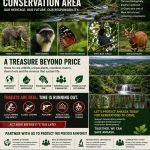
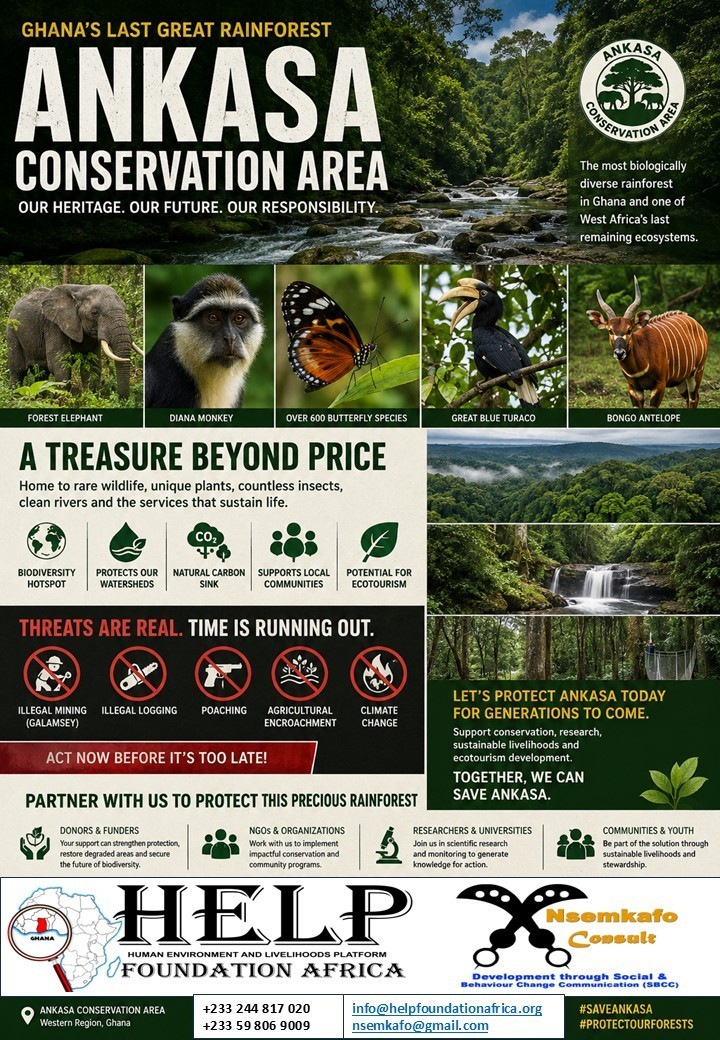
The Ankasa Conservation Area is widely regarded as the most biologically rich and ecologically important rainforest ecosystem in Ghana. Located in the southwestern part of the country near the border with Côte d’Ivoire, the conservation area comprises the Ankasa Resource Reserve and the Nini-Suhien National Park. Together, these forests form part of the globally significant Upper Guinea Forest ecosystem, one of the world’s recognized biodiversity hotspots.
Ankasa represents the last remaining extensive wet evergreen rainforest in Ghana and serves as a refuge for endangered wildlife species, endemic flora, and vital ecosystem services. The forest is internationally important for biodiversity conservation, climate regulation, watershed protection, scientific research, and ecotourism development.
Despite its immense ecological value, Ankasa faces growing threats from illegal logging, illegal mining (galamsey), poaching, agricultural encroachment, climate change, weak enforcement, and inadequate financing for conservation management. The future survival of this globally important forest depends on stronger governance systems, improved stakeholder participation, sustainable financing mechanisms, and enhanced ecological monitoring.
Ecosystem Services Provided by Ankasa Forest
1. Climate Regulation: The forest stores large quantities of carbon and contributes to climate change mitigation.
2. Watershed Protection: Ankasa protects important river systems that sustain biodiversity and local communities.
3. Soil Conservation: Forest vegetation prevents erosion and maintains soil fertility.
4. Livelihood Support: Local communities depend on: non-timber forest products, medicinal plants, ecotourism, fisheries, sustainable agriculture.
5. Scientific and Educational Value: Ankasa provides opportunities for: biodiversity research, conservation education, ecological monitoring, climate studies.
Major Threats Facing Ankasa Forest
1. Illegal Logging: Unauthorized timber extraction continues to threaten forest integrity and wildlife habitats.
2. Illegal Mining (Galamsey): Mining activities cause: water pollution, sedimentation, habitat destruction, chemical contamination of rivers.
3. Poaching and Bushmeat Hunting: Unsustainable hunting threatens endangered mammals and primates.
4. Agricultural Encroachment: Expansion of cocoa farms and settlements contributes to forest fragmentation.
5. Weak Enforcement Capacity: Challenges include: inadequate logistics, insufficient staffing, limited surveillance systems, weak prosecution of environmental crimes.
6. Climate Change: Changing rainfall patterns and rising temperatures may alter forest ecosystems and species distributions.
Recommendations for Improving Protection and Management of Ankasa Forest
1. Strengthen Law Enforcement and Forest Governance: Government should: increase ranger numbers, improve logistics and patrol systems, deploy modern surveillance technologies, strengthen prosecution of environmental crimes.
Collaborative enforcement involving: Forestry Commission, Wildlife Division, security agencies, local communities, etc. should be enhanced.
2. Establish Sustainable Conservation Financing: There is urgent need for: biodiversity trust funds, carbon financing mechanisms, REDD+ initiatives, ecotourism investment, international conservation partnerships. Long-term funding is essential for effective forest management.
3. Promote Community-Based Natural Resource Management Local communities should become active partners in conservation through: benefit-sharing arrangements, livelihood diversification, conservation agriculture, beekeeping, ecotourism enterprises, sustainable fisheries. Community participation improves local ownership and reduces conflicts.
4. Enhance Scientific Research and Biodiversity Monitoring: Government and academic institutions should: conduct regular biodiversity surveys, establish long-term ecological monitoring, improve wildlife population assessments, map critical habitats, strengthen climate research. Research partnerships with universities and international conservation organizations should be expanded.
5. Develop Sustainable Ecotourism: Ankasa has significant ecotourism potential due to its: rainforest scenery, canopy walk opportunities, birdwatching, butterfly diversity, wildlife viewing.
Investment should focus on: eco-lodges, visitor infrastructure, trained local tour guides, conservation education centers. Ecotourism can generate sustainable revenue while promoting conservation awareness.
6. Strengthen Transboundary Conservation Cooperation. Since the Upper Guinea ecosystem extends beyond Ghana, stronger collaboration with Côte d’Ivoire and neighboring countries is essential for: wildlife corridor protection, anti-poaching operations, biodiversity research, ecosystem restoration.
7. Restore Degraded Forest Areas. Forest restoration should include: native tree planting, wetland restoration, invasive species control, riverbank rehabilitation.
Landscape restoration can improve ecosystem resilience and biodiversity recovery.
Conclusion
The Ankasa Conservation Area remains one of Ghana’s greatest natural treasures and one of West Africa’s most important rainforest ecosystems. Its biodiversity richness, ecological services, climate importance, and scientific value make it indispensable to both national and global conservation efforts.
However, increasing anthropogenic pressures threaten the long-term survival of this unique ecosystem. Effective conservation of Ankasa will require stronger political commitment, improved governance systems, enhanced law enforcement, sustainable financing, scientific research, and active community participation.
Protecting Ankasa is not only a national environmental responsibility but also a global obligation toward safeguarding one of the last remaining intact rainforest ecosystems in West Africa for future generations.
HELP Foundation Africa Policy Desk. Tel: +233244817020. WhatsApp: +233598069009. Email: info@helpfoundationafrica.org
For media inquiries Contact: Kwadwo Kyei Yamoah (+233 244 817020, Kkyeiyams@gmail.com)