

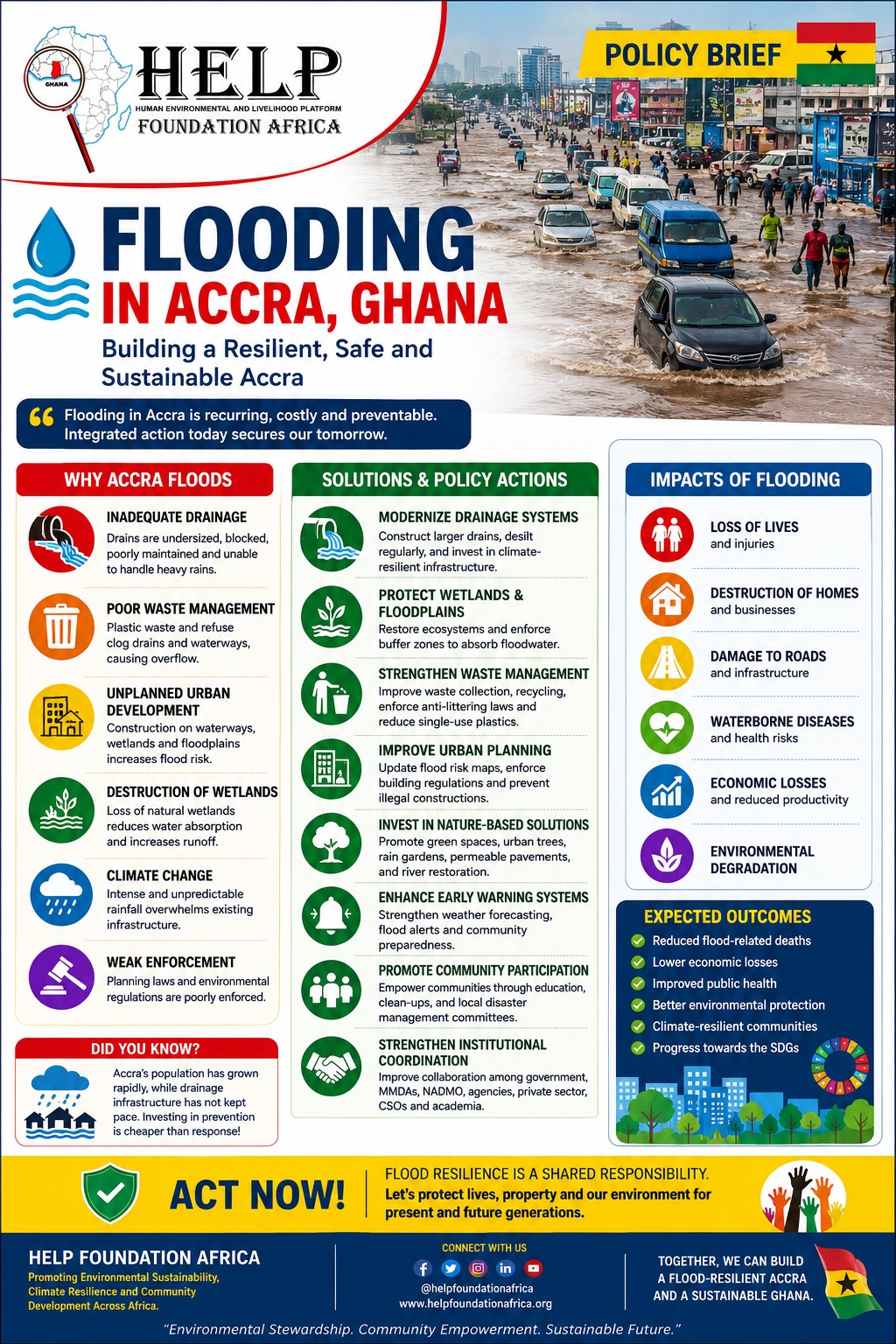
Floods are not natural disasters—they are policy and governance failures that we can fix.
Every rainy season, lives are lost, homes and businesses are destroyed, roads become impassable, and families are displaced. While climate change is making rainfall more intense, the devastating impact of flooding in Accra is largely the result of human actions and years of inadequate planning.
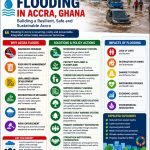
Why Does Accra Keep Flooding?
- Poor and inadequate drainage systems
- Plastic waste blocking gutters and waterways
- Unplanned urban development and illegal construction on waterways
- Destruction of wetlands and natural flood buffers
- Weak enforcement of environmental and planning regulations
- Increasingly intense rainfall due to climate change
HELP FOUNDATION Africa calls for urgent and coordinated action:
- Modernize and expand stormwater drainage systems.
- Restore and protect wetlands and floodplains.
- Strengthen solid waste management and reduce plastic pollution.
- Enforce planning and building regulations without exception.
- Invest in nature-based solutions such as urban trees, green spaces, and permeable surfaces.
- Improve flood early warning systems and community preparedness.
- Strengthen collaboration among government, local authorities, civil society, the private sector, and citizens.
Our Call to Action
Flood resilience is a shared responsibility. We cannot continue to rebuild after every rainfall while ignoring the root causes. Ghana must shift from reactive disaster response to proactive flood prevention through sustainable urban planning, environmental protection, and climate-resilient infrastructure.
Together, we can build a safer, cleaner, and flood-resilient Accra.
HELP FOUNDATION Africa remains committed to advancing evidence-based policies, environmental stewardship, climate resilience, and sustainable community development across Ghana and Africa.
Please contact
HELP Foundation Africa Policy Desk. Tel: +233244817020. WhatsApp: +233598069009. Email: info@helpfoundationafrica.org
For media inquiries Contact: Kwadwo Kyei Yamoah (+233 244 817020, Kkyeiyams@gmail.com)